Turbulence risks to airline passengers
Turbulence happens on just about every flight, but most of the time the amount of turbulence is very small, and the level of risk is very low. In those rare cases where the turbulence is severe, any passenger who is not buckled up can be seriously injured. The following insights and advice should keep you from becoming one of those statistics.
Airline turbulence basics
You can experience turbulence for many reasons, typically due to weather conditions such as thunderstorms. Severe turbulence can happen in any phase of flight, but it's most likely to be hazardous during cruise when passengers and crew may be out of their seats and not belted in. In most cases a passenger experiencing turbulence will feel nothing more than a slight vibration. At the other extreme are those rare events that are severe enough to throw passengers around the cabin.
Fear of flying and turbulence
Capt. Tom Bunn of the SOAR fear of flying program offers insights into what causes turbulence, and shows passengers a method for controlling the anxiety that turbulence causes some passengers.
Get the AirSafe.com Fear of Flying Resource Guide
Injuries from overhead baggage
Passengers are at risk of injury from falling debris during turbulence, as well as during other events like hard landings. A mid-1990s study of airline passenger injuries from overhead luggage published by the Flight Safety Foundation surveyed airlines showed that an estimated 10,000 passengers were injured each year by falling luggage. Passengers sustained injuries ranging from bruises to lacerations to severe head trauma. Sometimes those suffering head trauma may not show symptoms for several hours or days, and the effects of the trauma may linger for several months.
Deaths and injuries from air turbulence
While fatalities are rare, they do happen. Since 1980, AirSafe.com has identified six fatal turbulence accidents where at least one passenger was killed on a jet airliner. Less severe injuries are more common. For example, during the seven-year period 2003-2009, the NTSB identified 80 turbulence events on airliners that involved a serious injury to at least one person on the aircraft.
Reducing your risks from turbulence
When the flight crew expects turbulence, they will work with the cabin crew to make sure that passengers are in their seats and belted in, and that serving carts and other loose items are properly secured. Even when turbulence is not expected, you should take a few basics steps before and during the flight to ensure your safety:
- Follow the instructions of the crew - If the crew suggests that passengers return to their seats, do so as soon as you can.
- Wear your seat belt at all times - Turbulence events can happen even during a smooth flight on a cloudless day. Turbulence is not always predictable and may arrive without warning.
- Be aware of your overhead bin - Avoid sitting under a bin that is heavily packed or that contains one or more heavy items. If you can, move to a seat that is not directly under a bin.
Measure turbulence when you fly
If you fly regularly, you will routinely experience turbulence. Although it is routine, it can be worrisome to some air travelers who are already anxious flyers. Most of the time the amount of turbulence is very small, and although the flight crew may reassure passengers either before or after encountering turbulence, they don't provide passengers with any kind of objective measures for turbulence, and passengers had no easy way of finding out on their own.
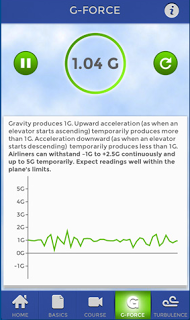
That has all changed with the release of the new SOAR Fear of Flying smartphone app. Available in versions for iPhone, iPad, and for Android devices, the app includes a G-force meter that you can use to chart the amount of turbulence that you are personally experiencing. An example of this screen is below:
Get the app today!
The app is free, and can be downloaded by clicking the image below or by clicking here:

Weather and turbulence data
US Weather Radar
US Lightning Activity
Turbulence forecasts
Related safety resources
Fear of Flying Resources
Cabinsafe Cabin Safety Home Page
http://www.airsafe.com/cabin/turb.htm -- Revised 23 October 2015

