Recent plane crashes
The following are recent plane crashes involving airliners, as well as other significant safety or security events that affect airline travel.
Numbered events have to meet three criteria: the event involved an airliner flight available to the general public, the aircraft model was one commonly used by airlines in North America and western Europe, and at least one passenger (excluding hijackers, saboteurs, or stowaways) was killed. You can find a detailed explanation on the Definitions page.
The list of recent crashes follows the table of links to other plane crash pages.
Safety-related pages
- 9 January 2021; Sriwijaya Air; 737-500; PK-CLC; flight SJ-182; near Jakarta, Indonesia:
The aircraft was on a scheduled domestic flight from Jakarta to Pontianak, Indonesia.
The aircraft was climbing through about 10,800 feet when it entered a steep descent and crashed into the Java Sea
All six crew members and 56 passengers were killed.
More on this event
Boeing 737 plane crashes
13 October 2020; Iran Aseman Airlines; Fokker F100; EP-ATE; flight EP-3962; Tehran, Iran: The aircraft was on a scheduled domestic flight from Tehran to Ardabil, Iran. The right engine of the aircraft experienced an uncontained failure during the takeoff roll, and the crew rejected the takeoff. Parts of the engine penetrated the fuselage, passing close to one of the flight attendants. None of the seven crew members and 87 passengers were injured.
Fokker F100 plane crashes - 22 May 2020; Pakistan International Airlines A320-200; AP-BLD; flight PK8303; Karachi, Pakistan:
The aircraft was on a scheduled domestic flight from Lahore to Karachi, Pakistan.
During the first landing attempt, the both engines scraped against the runway, damaging the lower portions of both engines.
The crew rejected that landing and during the second approach the landing gear were observed in an extended postion.
At some point after the first landing attempt, the Ram Air Tubine (RAT) had been deployed.
The crew was unable to reach the airport on the second landing attempt, crashing in a densely populated residential area less than a mile from the runway.
All eight crew members and 89 of the 91 passengers passengers were killed. Several people on the ground, as well as the two surving passengers, were seriously injured
Other A320 crashes
Pakistan International Airlines crashes
More about this event - 7 August 2020; Air India Express; 737-800; VT-AXH; flight 1344; Kozhikode, India:
The aircraft was on a scheduled international flight from Dubai, UAE, to Kozhikode, India.
During the landing, it was raining and the aircraft had a tailwind.
The aircraft exited the runway, rolled down an embankment and broke up, coming to rest about 800 feet beyond the end of the runway.
All six crew members and 152 of the 160 passengers were killed.
More on this event
Boeing 737 plane crashes - 5 February 2020; Pegasus Airlines 737-800; TC-IZK; flight PC2193; Istanbul, Turkey:
The aircraft was on a scheduled domestic flight from Izmir to Istanbul, Turkey.
The aircraft attempted to land with a significant tailwind.
The aircraft touched down long, about 6,400 hundred feet past the threshold and about 3,300 feet from the end of the runway.
The aircraft overran the runway, struck a localizer antenna, crossed a road, went down an embankment, hit a wall, and broke up into several large sections.
All six crew members survived, but three of the 177 passengers were killed.
More on this event
Boeing 737 plane crashes
26 January 2020; Sikorsky S-76B helicopter; N72EZX; Calabasas, CA: A helicopter carrying former NBA player Kobe Bryant, his daughter Gianna, and seven others crashed north of Los Angeles in Calabasas, CA about 45 minutes after taking off from Santa Ana, CA south of Los Angeles. All nine on board were killed, but the crash occurred in a wooded area and no one else was injured or killed. No one on the ground was injured or killed.
More on this event
Other celebrity plane crashes - 8 January 2020; Ukraine International Airlines 737-800; UR-PSR; flight PS752; Tehran, Iran:
The aircraft was on a scheduled international flight from Tehran, Iran to Kyiv (Kiev), Ukraine.
Shortly after takeoff, the aircraft was damaged by a surface to air missile that was inadvertently launched by the Iranian military.
The aircraft lost contact with air traffic control, and was turning back toward the airport when it lost altitude and crashed in a residential area.
All nine crew members and 167 passengers were killed.
No one on the ground was injured or killed.
Boeing 737 plane crashes
Other crashes involving airlines of the former Soviet Union
Passenger deaths to to missiles and gunfire - 27 December 2019; Bek Air; Fokker F100; UP-F1007; flight 2100; Almaty, Kazakhstan:
The aircraft crashed into a building near the airport shortly after takeoff on a domestic flight from Almaty to Nur-Sultan, Kazakhstan.
One of the five crew members, and 11 of the 96 passengers were killed.
Fokker F100 plane crashes
Plane crashes in Russia and the former Soviet Union
26 December 2019; Safari Helicopters; Eurocopter AS350 B2; Kauai, HI: The helicopter departed from Lihue, HI for a sightseeing flight over the island of Kauai. The aircraft crashed into a cliff in the northwest section of the island about a mile inland from the coast. The pilot and all six passengers were killed.
20 December 2019; Boeing CST-100 Starliner: The spacecraft, on an uncrewed test flight, failed to achieve its primary objective of docking with the International Space Station (ISS). Due to one or more errors, the spacecraft's internal clock was not correct, and as a result the spacecraft did not execute an engine burn to put the spacecraft into an orbit to allow a docking with the ISS. In addition, the spacecraft's flgiht control system commanded a series of inappropriate engine burns. Mission control commanded the spacecraft to stop the inappropriate engine burns, but there was not enough fuel remaining to reach the ISS. The spacecraft continued the flight and successfully landed two days after liftoff.
9 December 2019; Chilean Air Force C130H; Drake Passage, Antarctica: This miliary aircraft was on a nonscheduled international flight, from Punta Arenas, Chile to a Chilean Antarctic base on King George Island, Antarctica. Debris from the aircraft was found in the Drake Passage between South America and Antarctica. All 17 crew members and 21 passengers were killed.
24 November 2019; Busy Bee Congo Dornier 228; 9S-GNH; Goma, Democratic Republic of the Congo: The aircraft was on a scheduled domestic flight from Goma to Beni, Democratic Republic of the Congo, and crashed into a residential neighborhood shortly after takeoff. Both crew members and all 17 passengers were killed. At least seven persons on the ground, including six from one family.
1 September 2019; Libyan Airlines A330-202; 5A-LAU; flight LN1275; Tripoli, Libya: The aircraft was on a nonscheduled international flight from Medina, Saudi Arabia to Tripoli, Libya, and came under rocket attach while passengers were disembarking. The aircraft was damaged and four of the passengers were injured by the rocket attack.
Plane crashes in Russia and the former Soviet Union
27 August 2019; Air China A330-343; B-5958; flight CA183; Beijing, China: The aircraft was on a scheduled international flight from Beijing, China to Tokyo, Japan when a fire broke out in one of the forward cargo compartments. At the time, the aircraft was at the gate and 147 passengers had already boarded the aircraft. The passengers and 14 crew members rapidly exited the aircraft using the jetbridge. No occupants were injured, but the fire substantially damaged the aircraft, including a burn-through of the crown. The aircraft was damaged beyond repair.
More on this event
15 August 2019; Ural Airlines A321-211; VQ-BOZ; Zhukovsky, Russia: The aircraft was on a scheduled domestic flight from Zhukovsky to Simferopol, Russia when it encountered a flock of birds shortly after takeoff. Both engines were struck and lost power. The crew landed the aircraft in a field, with landing gear up, about two kilometers from the runway. There was no post crash fire. All seven crew members and 226 passengers survived the emergency landing.
Plane crashes in Russia and the former Soviet Union
18 May 2019; WestJet 737-800; C-FZRM; flight WS1948; near Orlando, FL: The aircraft was on an international flight from St. John's, Canada to Orlando, FL when the aircraft was struck by a green laser during approach at about 10,000 feet. The aircraft landed safety but the strike injured the eyes of one of the pilots, Laser threats to aircraft have been a concern to the aviation community for several years.
Boeing 737 plane crashes
Recently, AirSafe.com completed a review of nine years of FAA laser strike data and found that there were an an average of nearly seven laser encounters per day involving airliners in the US.
13 May 2019; Mountain Air Service de Havilland Canada DHC-2 Beaver (N952DB) and Taquan Air DHC-3 Otter (N959PA); Ketchikan, AK: The two aircraft, both floatplanes, were flying a total of 14 passengers from a cruise ship that was docked in Ketchikan, AK when they were involved in a midair collision over George Inlet, about eight nautical miles from Ketchikan. There was one pilot and four passengers on the Beaver and one passener and 10 passengers on the Otter. Four of the 16 occupants were killed, two are missing, and 10 survived. The NTSB launched a major investigation into this event.
12 May 2019; Myanmar National Airlines Embraer ERJ-190LR; XY-AGQ; flight UB103; Mandalay, Myanmar: The aircraft was on a scheduled domestic flight from Yangon to Mandalay, Myanmar. During approach, the crew could not extend the nose gear. The aircraft overflew the runway twice to have tower check the landing gear and then entered a hold to burn off fuel. The crew landed on the runway with the main landing gear only, substantially damaging the fuselage of the aircraft. Smoke entered the cabin and the occupants evacuated. The seven crew members and 82 passengers were not injured.
Embraer plane crashes
8 May 2019; Myanmar National Airlines Dash 8-402; S2-AGQ; flight BG60; Yangon, Myanmar The aircraft was on a scheduled international flight from Dhaka, Bangladesh to Yangon, Myanmar. After touching down, the aircraft veered left off the runway and came to a stop on soft ground with all gear collapsed and the fuselage broken into three sections. The 29 passengers and four crew members received injuries with 19 of them hospitalized.
Dash 8 plane crashes - 5 May 2019; Aeroflot Sukhoi Superjet 100-95B; RA-89098; flight SU1492; Moscow, Russia:
The aircraft was on a scheduled domestic flight from Moscow to Murmansk, Russia when the crew used their radar transponder to indicate a loss of radio communication.
The crew returned to the departure airport and apparently had a hard landing, bouncing at least twice.
During one of the bounces, the aircraft appeared to have a tail strike at about the same time that flames appeared toward the rear of the aircraft.
The aircraft continued to trail smoke and flames as it continued its rollout, veering off the left side of the runway and coming to rest adjacent to the runway.
The back half of the aircraft was engulfed in flames as the passengers and crew escaped through the left and right forward emergency exit slides.
One of the five crew members and 40 of the 73 passengers were killed.
This was second fatal Sukhoi Superjet accident and the first involving a comercial airline flight.
Plane crashes from airlines of Russia and the former Soviet Union
3 May 2019; Miami Air International 737-800; N732MA; flight GL293; Jacksonville, FL: The aircraft was on a scheduled international flight from Guantanamo Bay, Cuba to Jacksonville, FL. The aircraft overran the end of the runway and came to a stop in the shallow waters of an adjacent river about 1,250 feet (380 meters) beyond the end of the runway. There were seven crew members and 136 passengers on board, and at least 21 of the occupants were injured. Two dogs and a cat that were in pet carriers in the cargo area of the aircraft were killed, and a cat that was in the passenger cabin survived. The aircraft was on a scheduled charter flight carrying military and civilian members of the US military.
Boeing 737 plane crashes
More about the crash
20 April 2019; SpaceX Crew Dragon: The spacecraft exploded during a ground test of capsule's abort system. That system uses eight dedicated thrusters to separate the capsule from the rest of the rocket either on the ground or during the early phases of a launch. A leak in the system led to an overpressure within the fuel system and a subsequent explosion. There were no crew on board and no one outside the spacecraft was injured or killed. - 10 March 2019; Ethiopian Airlines 737 MAX 8; ET-AVJ; flight ET302; near Ejere, Ethiopia:
The aircraft was on a scheduled international flight from Addis Ababa, Ethiopia to Nairobi, Kenya.
Shortly after takeoff, the flight crew reportedly declared an emergency shortly after takeoff, stating that they had unreliable airspeed indications and had difficulties controlling the aircraft.
The crew was agranted a request to return to the departure airport, but the aircraft crashed about six minutes after departure.
All eight crew members and 149 passengers were killed.
Boeing 737 plane crashes
Ethiopian Airlines plane crashes
More on this crash
23 February 2019; Amazon Prime Air 767-300; N1217A; flight 3591; near Anahuac, TX: The aircraft was on a cargo flight from Miami, FL to Houston, TX and crashed into Trinity Bay about 30 miles (48 km) southeast of its destination. The two crew members and one passenger were killed.
More about this event
Boeing 767 plane crashes
Recent US crashes - 9 November 2018; Fly Jamaica 757-200; N524AT; flight 924; Georgetown, Guyana:
The aircraft was on a scheduled international flight from Georgetown, Guyana to Toronto, Canada.
The crew experienced a hydraulic system failure during climb, stopped the climb at FL200, and elected to return to the departure airport.
The aircraft had an excursion off the right side of the runway, coming to rest just short of the end of the runway off to the right.
The right main landing gear collapsed, the right engine separated from the aircraft, and the right wing was damaged.
All eight crew members survived, and one of the 120 passengers was killed.
Boeing 757 plane crashes
More about this event - 29 October 2018; Lion Air 737 MAX 8; PK-LQP; flight JT610; near Jakarta, Indonesia:
The aircraft was on a scheduled domestic flight from Jakarta to Pangkal Pinang, Indonesia.
The aircraft reportedly crashed in the sea a few minutes after takeoff.
All eight crew members and 181 passengers were killed.
Boeing 737 plane crashes
Lion Air plane crashes
More on this crash - 28 September 2018; Air Niugini 737-800; P2-PXE; flight PX73; Chuuk, Micronesia:
The aircraft was on a scheduled domestic flight from Pohnpei to Chuuk, Micronesia.
The aircraft impacted the water of Chuuk Lagoon about 1,500 ft (460 m) short of the runway threshold.
As the aircraft sank, all but one of the occupants were able to escape the aircraft.
All 12 crew members survived and one of the 35 passengers were killed.
Aviation Herald article about the crash
Boeing 737 plane crashes
More on this crash
10 August 2018; Horizon Air Dash 8-402Q; N449QX; near Seattle, WA The aircraft was taken on an unauthorized flight by Richard Russell, a ground service operator with the airline who not certified as a pilot, and did not have authorization to be in the aircraft. After departing from Seatac Airport, Russell flew the aircraft for about 75 minutes in an area south of Seattle, performing number of extreme maneuvers, before crashing on an island in Puget Sound about 40 kilometers south of the departure airport. Russell, the sole occupant of the aircraft, was killed.
Crashes caused by airline insiders
Dash 8 plane crashes
Horizon Air plane crashes
More about this event
31 July 2018; Aeromexico Connect Embraer ERJ-190AR; XA-GAL; flight AM2431; Durango, Mexico: The aircraft crashed shortly after takeoff on a domestic flight from Durango to Mexico City, Mexico. There were no fatalities among the 99 passengers and four crew members.
Embraer ERJ-190 plane crashes
Aeromexico plane crashes
More about this event - 18 May 2018; Cubana 737-200; XA-UHZ; flight 972; Havana, Cuba:
The aircraft was on a scheduled domestic flight from Havana to Holguin, Cuba.
The aircraft crashed shortly after takeoff.
All six crew members survived and 112 of the 113 passengers were killed.
Boeing 737 plane crashes
Cubana plane crashes
Sole survivor plane crashes
More about this event - 17 April 2018; Southwest Airlines 737-700; N772SW; flight 1380; near Philadelphia, PA:
The aircraft was on a scheduled flight from New York, NY to Dallas, TX.
Shortly before reaching cruising altitude, the left engine experienced a catastrophic failure, with engine debris striking the side of the aircraft.
One passenger window was breached by engine debris and the aircraft had a rapid decompression.
The flight crew executed an emergency descent and diverted to Philadelphia.
All five crew members survived and one of the 143 passengers was killed.
Boeing 737 plane crashes
Southwest plane crashes
More about this event - 12 March 2018; US-Bangla Airlines Dash 8-402Q; S2-AGU; flight 211; Kathmandu, Nepal:
The aircraft was on a scheduled international flight from Dhaka, Bangladesh to Kathmandu, Nepal.
The aircraft was cleared to land on runway 20 but for reasons that are unclear the aircraft attempted a landing on the opposite runway 02.
All four crew members and 47 of the 67 passengers were killed.
More about this crash
Dash 7 and Dash 8 plane crashes - 18 February 2018; Iran Aseman Airlines ATR 72-212; EP-ATS; flight 3704; near Yasuj, Iran:
The aircraft was on a scheduled domestic flight from Tehran to Yasuj, Iran.
About 50 after minutes takeoff, the aircraft crashed crashed in a mountainous area about 10 nm from its destination.
All six crew members and 59 passengers were killed.
ATR 42 and ATR 72 plane crashes
More on this event
- 11 February 2018; Saratov Airlines Antonov An148 ; RA-61704; flight 703; near Stepanovskoye, Russia:
The aircraft was on a scheduled domestic flight from Moscow to Orsk, Russia.
Within a few minutes after takeoff, the aircraft entered a rapid descent and crashed.
All six crew members and 65 passengers were killed.
Crashes involving countries of the former Soviet Union
More on this event
31 December 2017; Nature Air Cessna 208B Grand Caravan; TI-BEI, near Punta Islita, Costa Rica: The aircraft, which was on an unscheduled domestic flight from Punta Islita to San Jose, Costa Rica crashed shortly after takeoff. Both crew members and all 10 passengers were killed. The passengers were all tourists, including five members of a family from the United States.
31 December 2017; Sydney Seaplanes de Havilland Canada DHC-2 Beaver; VH-NOO; Jerusalem Bay, Australia: The aircraft, which was on an unscheduled domestic flight from Jerusalem Bay to Rose Bay (Sydney Harbor), Australia, cashed shortly after takeoff. The pilot and five passengers were killed. The passengers included Richard Cousins, the CEO of the Compass Group, two of his sons, his fiancee, and her daughter. - 13 December 2017; West Wind Aviation ATR 42-300; Fond-du-Lac, Canada
The aircraft crashed into a wooded area shortly after takeoff on a flight from Fond-du-Lac to Stony Rapids, both in northern Saskatchewan
All three crew members survived and one of the 22 passeners died of his injuries two weeks after the crash.
More on this event
ATR 42 and ATR 72 plane crashes
7 November 2017; ICON A5; N922BA, Clearwater, FL: Former Toronto Blue Jays and Philadelphia Phillies pitcher Roy 'Doc' Halladay was killed when his amphibious, light sport aircraft crashed into the water at a steep angle. According the NTSB, earlier in his flight, the aircraft was flying at a low altitude over water, and passed as close as 75 feet from several beach houses. Video footage taken of the airplane before the accident, shows the airplane in a descending left 45 degree banked turn and then maneuvering about 10 ft above the water. A witness to the accident stated, during an interview with an NTSB investigator, that he saw the airplane perform a climb to between 300 and 500 ft on a southerly heading and then turn and descend on an easterly heading about a 45 degree nose-down attitude. The aircraft broke up and sank after hitting the water. Halladay was the sole occupant of the aircraft.
More on this event
Preliminary NTSB report
Celebrity plane crashes
12 October 2017; Guicango Embraer EMB-120ER Brasilia; D2-FDO; near Cuílo, Angola: The aircraft was a domestic air ambulance flight transporting a patient from Dundo to Luanda, Angola. About 15 minutes after departure, the crew reported an engine malfunction and fire. The aircraft crashed near the town of Cuílo, killing all three crew members and four passengers, including the patient.
8 September 2017; Schweizer 269C helicopter; N204HF; Medford, NJ: Singer Troy Gentry, of the music duo Montgomery Gentry, was killed in the crash of a Schweizer 269C during flight at the Flying W Airport in Medford, NJ. Gentry, who was scheduled to perform at a concert at the airport later that day, was on an orientation flight conducted by a commercial helicopter pilot. During the flight, the pilot experienced throttle control issues and executed an autorotation maneuver to land the helicopter. The helicopter struck the ground a high descent rate, killing both Gentry and the pilot were killed by the impact. They were the only occupants of the helicopter.
More on this event
Celebrity plane crashes
7 July 2017; Air Canada; Airbus A320-200; C-FKCK; flight 759; San Francisco, CA: The aircraft was on a scheduled international flight from Toronto, Canada and San Francisco, CA. Shortly before midnight, the aircraft was on a visual approach to Runway 28R, but was apparently aligned with the Taxiway C, which parallels Runway 28R. The aircraft continued toward the taxiway and had overflown that taxiway by about 0.25 miles (400 meters) when ATC instructed the aircraft to go around. There were four aircraft lined up on Taxiway C at the time. The landing aircraft passed about 100 feet (30 meters) above the first two aircraft, 200 feet (61 meters) above the third aircraft, and 300 feet (91 meters) above the fourth aircraft. The closest lateral proximity between the landing aircraft and one of the four aircraft on taxiway C was 29 feet (nine meters).
Air Canada plane crashes
Airbus A320 plane crashes
Preliminary incident report and SFO airport diagram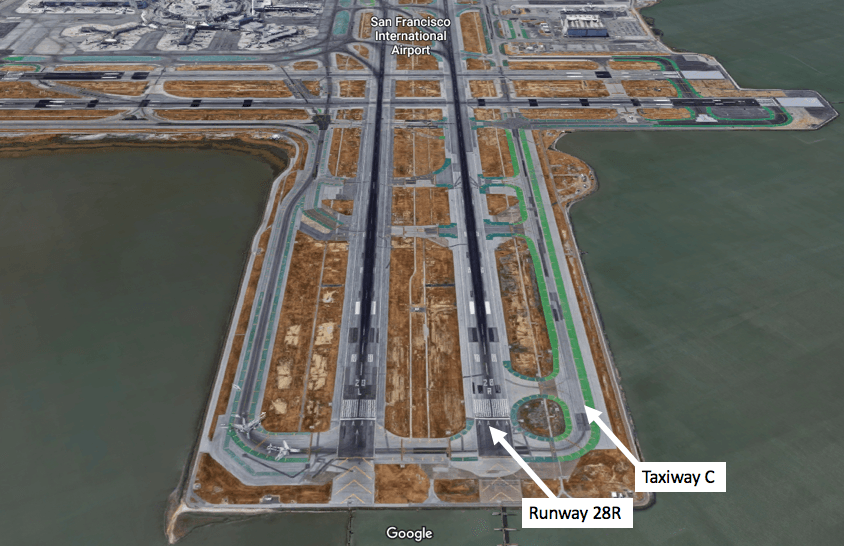
7 June 2017; Myanmar Air Force; Shaanxi Y-8F-200W; 5820; near Dawei, Myanmar: The aircraft was on an unscheduled domestic flight from Myeik to Yangon, Myanmar. The aircraft crashed in the Andaman Sea while en route to its destination, with the last contact with the aircraft about 20 miles west of Dawei, Myanmar. All 14 crew members and 108 passengers were killed. This was a military aircraft on a non-airline flight and carried military personnel and their families as passengers. The aircraft is a variant of the Soviet Union-designed Antonov An-12 aircraft which was was produced by the Shaanxi Aircraft Corporation in China.
28 March 2017; Peruvian Airlines; 737-300; OB-2036-P; flight 112; Jauja, Peru: The aircraft was on a scheduled domestic flight from Lima to Jauja, Peru. After touchdown, the airplane apparently veered off the right side of the runway. The rightwing of the aircraft impacted the perimeter fence, which ruptured a fuel tank. The leaking fuel caught fire, and the fuselage was consumed by fire. All nine crew members and 141 passengers were able to evacuate the aircraft, and there were no fatalities.
More on this event
Boeing 737 plane crashes
16 January 2017; Turkish Airlines 747-400F; TC-MCL; flight TK6491; Bishkek, Kyrgyzstan: The cargo aircraft was on an international flight from Hong Kong, to Bishkek, Kyrgystan and crashed shortly after an aborted landing attempt. The aircraft struck a residential area about 500 meters from the far end of the runway. At the time, there was freezing fog and limited runway visibility reported at the airport. All four crew members and 35 people on the ground were killed were killed.
Turkish Airlines crashes
Boeing 747 plane crashes
More information on this event
25 December 2016; Russian Air Force; Tu154B-2; RA-85572; near Sochi, Russia: The aircraft was on an unscheduled international flight from Sochi, Russia to Latakia, Syria. The aircraft, which was transporting members of the Alexandrov Ensemble, the official choir of the Russian Armed forces, crashed into the Black Sea shortly after takeoff. Wreckage was found about one mile (1.6 km) from the coast. All eight crew members and 84 passengers were killed.
20 December 2016; AeroSucre 727-200; HK-4544, flight LMI2933; near Puerto Carreño, Colombia:
The aircraft was on a nonscheduled domestic cargo flight from Puerto Carreño to Bogotá, Colombia. Just after takeoff, the aircraft crossed a road that was about 100 meters beyond the end of the runway, apparently hitting at least one fence and dragging the rear part of the aircraft on the ground. The aircraft became airborne, but did not gain a significant amount of altitude. The aircraft was videotaped making a descending right turn just before it crashed and caught fire. The crash site was about 10 miles (16 km) from the airport. Five of the six crew members were killed.
727 plane crashes - 7 December 2016; Pakistan International Airlines ; ATR 42-500; AP-BHO; flight PK661; near Havelian, Pakistan
The aircraft was on a scheduled domestic flight from Chitral to Islamabad, Pakistan.
While en route, the crew reported that there was an engine problem, and that the aircraft was descending.
Shortly afterwards, the crew declared an emergency.
The aircraft crashed into a hillside and caught fire.
All five crew members and 42 passengers were killed.
More on this event
ATR plane crashes
PIA plane crashes
28 November 2016; LaMia Avro RJ85; CP-2933, flight LMI2933; near La Unión, Colombia:
The aircraft was on a nonscheduled international flight from Santa Cruz de la Sierra, Bolivia to Medellín, Colombia. On board was Brazilian Chapecoense Football Club, which was scheduled to play in the final of the 2016 Copa Sudamericana in Medellín.
Shortly before landing, the crew declared an emergency, reportedly due to an electrical problem, and the plane crashed into mountainous terrain near Medellín. Seven of the nine crew members and 64 of the 68 passengers were killed in the crash. Apparently, the owner of the airline, who was also a member of the flight crew, was killed in the crash.
More about this event
BAe 146/Avro series crashes
28 October 2016; FedEx Express DC-10; N370FE: Flight FX910; Fort Lauderdale, FL: The aircraft was on a domestic flight from Memphis, TN to Fort Lauderdale, FL. At some point during the landing, the left main landing gear collapsed, and the aircraft came to rest near the landing runway. A fire broke out, seriously damaging the left side of the aircraft. The two crew members were not injured.
Other DC-10 Plane Crashes
Other FedEx plane crashes
28 October 2016; American Airlines 767-300; N345AN; flight AAL383; Chicago, IL: The aircraft was on a scheduled domestic flight from Chicago, IL to Miami, FL. During the takeoff, the right engine experienced an uncontained failure, and the flight crew aborted the takeoff. The aircraft caught fire in the area of the right engine, and the aircaft occupants evacuated the aircraft. There were eight minor injuries among the 161 passengers and nine crew members.
Other 767 plane crashes
Other American Airlines plane crashes
27 October 2016; Eastern Airlines 737-700; N278EA; New York, NY: The aircraft was on an unscheduled domestic charter flight from Fort Dodge, IA to LaGuardia Airport in New York. After landing, the crew was unable to come to a stop on the runway. The aircraft was slowed by an arrestor bed of low-density concrete that was in place beyond the end of the runway. None of the 40 passengers or crew were injured. Among the passengers was Vice Presidential candiate Mike Pence, who is also the governor of the US state of Indiana.
Other 737 Plane Crashes
3 August 2016; Emirates 777-300; A6-EMW; flight EK521; Dubai, UAE: The aircraft was on a scheduled international flight from Thiruvananthapuram, India to Dubai, United Arab Emirates. The crew was attempting to execute a go-around shortly after the main landing gear touched down on the runway, but the aircraft was unable to gain altitude. The crew apparently did not advance the thrust beyond idle until after the aircraft had lifted off the runway. The crew had also commanded the landing gear to retract before commanding an increase in engine thrust. The aircraft settled down onto the runway at a rate of descent of 900 feet per minute and skidded to a stop on the runway. The aircraft was seriously damaged, with the right engine separated from the wing. There was a subsequent fire and explosion that destroyed most of the fuselage. None of the 18 crew members or 282 passengers were killed or seriously injured, though one responding firefighter was killed.
More on this event
Preliminary accident report
777 plane crashes
Emirates plane crashes
30 July 2016; Kubicek BB85; SU-GCC; near Lockhart, TX: The ballon was on an unscheduled flight that departed from Fentress Airpart in Fentress, TX. The ballon crashed burned after striking power lines about eight miles (12.9 km) from the launch location near Lockhart, TX. The pilot and all 15 passengers were killed. at an airport near Fentress, TX. While the victims and the ballon's gondola (an open basket) were near the point where the ballon struck power lines, the envelope was located roughly three-quarters of a mile (1.2 km) away.
According to the NTSB accident and incident database, there were 73 previous fatal balloon-related events in the US or involving a US-registered ballon outside the US. These prior events involved at most six fatalities
More on this event - 19 May 2016; EgyptAir A320-200; SU-GCC; flight MS804; en route Paris to Cairo:
The aircraft was on a scheduled international flight from Paris, France to Cairo, Egypt when radar contact was lost.
The aircraft was cruising at 37,000 feet and over the eastern Mediterranean Sea north of the Egyptian coast and crashed into the sea.
There were no survivors among the 56 passengers and 10 crew members on board.
Three of the crew members were reportedly security personnel.
A320 plane crashes
EgyptAir plane crashes
More about this eventTodd Curtis interviewed by Al Jazeera
Additional Todd Curtis interviews on BBC, NPR, and Fox Business .
13 April 2016; Sunbird Aviation; BN-2T Islander; P2-SBC; Kiunga, Papua New Guinea: The aircraft was on an unscheduled domestic scheduled flight from Oksapmin to Kiunga, Papua New Guienea, and crashed near the destination airport shortly before landing, reportedly due to an engine failure. All on board, including the pilot and 12 passengers, were killed.
More on this crash - 19 March 2016; flydubai 737-800; A6-FDN; flight FZ981; Rostov-on-Don, Russia:
The aircraft was on a scheduled international flight from Dubai, UAE to Rostov-on-Don, Russia.
The aircraft aborted its first landing approach, and entered a holding pattern for roughly an hour before its second attempt.
During the second landing attempt, the crew indicated that they planed to execute a go-around procedure, the aircraft then entered a steep descent, and then crashed on the edge of the runway.
All seven crew members and 55 passengers were killed.
Aviation Herald article about the crash
737 plane crashes
More on this flydubai crash
24 February 2016; Tara Air; DHC-6 Twin Otter 400Twin Otter; 9N-AHH; flight 193, Dana, Nepal: The aircraft was on a domestic scheduled flight from Pokhara to Jomsom Airport and crashed while en route to its destination. All three crew members and 20 passengers were killed. Tara Air is a subsidiary of Yeti Airlines. This airline is also banned from operating within the European Union. Tara Airlines had a previous fatal crash in December 2010, killing all three crew members and 19 passengers. - 2 February 2016; Daallo Airlines A321-100; SX-BHS; flight D3159; near Mogadishu, Somalia:
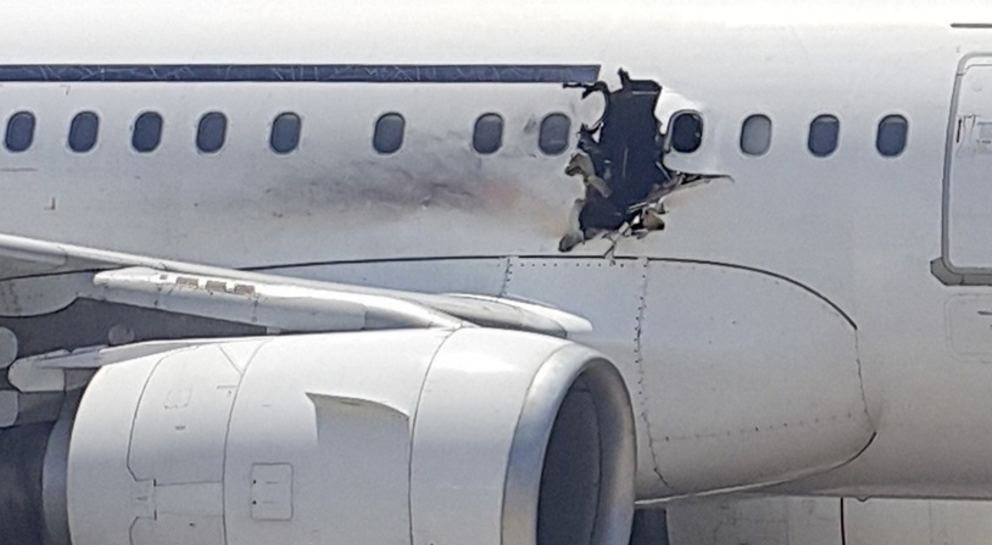 The aircraft was on a scheduled international flight from Mogadishu, Somalia to Djibouti.
Shortly after takeoff, when the aircraft was at about 11,000 feet, there was an explosion caused by a bomber that caused a fuselage rupture in the forward portion of the passenger cabin.
There was also evidence of fire in the area of the fuselage damage.
The crew was able to return to the departure airport at Mogadishu.
The only person killed was the bomber, who was ejected out of the aircraft.
None of the other 73 passeners were killed, though two were injured.
All seven crew members survived.
The aircraft was on a scheduled international flight from Mogadishu, Somalia to Djibouti.
Shortly after takeoff, when the aircraft was at about 11,000 feet, there was an explosion caused by a bomber that caused a fuselage rupture in the forward portion of the passenger cabin.
There was also evidence of fire in the area of the fuselage damage.
The crew was able to return to the departure airport at Mogadishu.
The only person killed was the bomber, who was ejected out of the aircraft.
None of the other 73 passeners were killed, though two were injured.
All seven crew members survived.
A320 plane crashes
More about this event
15 December 2015; Southwest Airlines 737-300; N649SW; flight 31; Nashville, TN: The aircraft was on a scheduled domestic flight from Houston, TX to Nashville, TN After arrival, the aircraft slid off the taxiway, collapsing its nose landing gear and coming to rest in a ditch. None of the five crew members or 133 passengers were killed. Several passengers sustained minor injuries.
737 plane crashes
Southwest Airlines crashes
4 November 2015; Rais Group International BAe 125-700; N237WR; flight EFT1526; Akron, OH: The executive jet was on a nonscheduled domestic passegner flight from Dayton, OH, to Akron, OH, and crashed about two miles (3.2 km) short of the landing runway. Shortly before the crash, the jet was seen to be banking to the left before hitting power lines and crashing into a pair of residential structures. Both pilots and all seven passengers were killed. No one on the ground was injured.
4 November 2015; Allied Services Limited Antonov 12BK; EY-406; flight 7K9268; Juba, South Sudan: The aircraft was on a nonscheduled domestic cargo flight from Juba to Paloich, South Sudan, and crashed shortly after takeoff. While the aircraft was operating as a cargo flight and was not authorized to carry passengers, there were roughly a dozen passengers on board All six crew members all but two of the passengers were killed. One of the survivors was a 13-month-old girl, Nyalou Thong. The total number of passengers, and the number killed on the ground, is unclear, but there were a total of 37 reported fatalities. - 31 October 2015; Metrojet A321-200; EI-ETJ; flight 7K9268; near Hasna, Egypt:
The aircraft was on a nonscheduled international flight from Sharm el Sheikh, Egypt to St. Petersburg, Russia.
Air traffic control lost contact with the flight about 23 minutes after departure, after the aircraft reached a cruising altitude of about 31,000 feet.
The aircraft crashed in a remote area of the Sinai Peninsula shortly thereafter.
All seven crew members and 217 passengers were killed.
This is the second fatal crash for this airline.
In January 2011, three passengers were killed after a Kolavia Tu154 caught fire shortly before takeoff .
Metrojet operated as Kogalymavia or Kolavia until 2012.
A320 plane crashes
Crashes involving airlines of Russia
More about this event
29 October 2015; Dynamic International Airways 767-200; N251MY; flight DYA405; Fort Lauderdale, FL: The aircraft was on a scheduled international flight from Fort Lauderdale, FL to Caracas, Venezuela when a fire broke out in the area of the left engine prior to takeoff. There were over a dozen injuries among 90 passengers and 11 crew members.
Plane crashes in Latin America and the Caribbean
767 plane crashes
5 October 2015; American Airlines A320; flight 550; Syracuse, NY: The aircraft was on a scheduled flight from Phoenix, AZ to Boston, MA, but diverted to Syracuse, NY after the captain fell ill and passed away during the flight. The first officer continued the flight and the aircraft diverted to Syracuse, NY. None of the other crew members or 147 passengers were injured.
A320 plane crashes
2 October 2015; US Air Force C130J; Jalalabad, Afghanistan: The aircraft was on a nonscheduled flight, and crashed shortly after takeoff from Jalalabad Airport. All six military crew members and five civilian passengers were killed. Two people on the ground were also killed.
8 September 2015; British Airways 777-200; G-VIIO; flight 2276; Las Vegas, NV: The aircraft was on a scheduled international flight from Las Vegas, NV to London, England when the left engine apparently failed and caught fire prior to takeoff. There was evidence of an uncontained fairlure of the left engine and pylon, including multiple breaches of the engine case in the area around the high pressure compressor. All of the occupants were able to exit the aircraft, but a fire in the area of the left engine damaged the left engine and pylon, left fuselage structure, and inboard left wing. There were no fatalities among the 13 crew members and 158 passengers.
777 plane crashes
British Airways plane crashes
Interview about a 2011 FAA directive that may be related to the engine failure
22 August 2015; Hawker-Hunter T7; G-BXFI; near Shoreham-by-Sea, United Kingdom: The pilot was executing aerobatic maneuvers while practicing for an airshow. The aircraft, which was a privately owned former military jet, crashed onto a nearby road during one of these maneuvers, killing 11 people who were on or near the road. The pilot was seriously injured.
Interview about airshow safety issues related to this crash - 16 August 2015; Trigana Air Service ATR 42-300; PK-YRN; flight IL257; near Oksibil, Indonesia:
The aircraft was on a scheduled domestic flight between Jayapura and Oksibil, Indonesia.
The airplane crashed in mountainous terrain at about 8,500 feet (2,600 m) above sea level during a period of reduced visibility due to rain and fog. residential area near the airport during a go around following an attempted landing at Magong, Taiwan, which is on Penghu island.
All five crew members and 49 passengers were killed.
ATR plane crashes
Trigana Air Service plane crashes
More about this event
30 June 2015; Indonesia Air Force C130B; A-1310; Medan, Indonesia: The aircraft was on a nonscheduled domestic flight from Medan to Tanjung Pinang and crashed into a residential neighborhood shortly after takeoff. The aircraft had a crew of 12 and 101 civilian passengers. The crew had reportedly requested a return to the departure airport. The passengers were military family members and the aircraft who were headed to Tanjung Pinang for Ramadan related activities.
25 June 2015; Promech Air; DeHavilland DHC-3T Turbine Otter; N270PA; near Near Ketchikan, AK: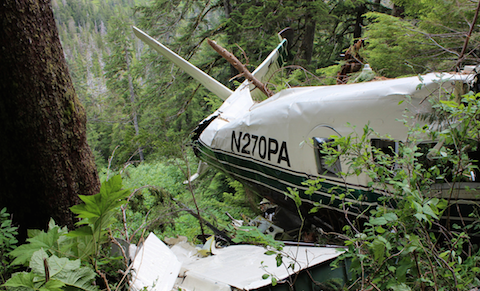 The aircraft was on an unscheduled excursion flight in the area of the Misty Fjords National Monument, and crashed into an area of steep, mountainous terrain.
The pilot and all eight passengers were killed.
The passengers were from a cruise ship, and were on a sightseeing flight.
The aircraft was on an unscheduled excursion flight in the area of the Misty Fjords National Monument, and crashed into an area of steep, mountainous terrain.
The pilot and all eight passengers were killed.
The passengers were from a cruise ship, and were on a sightseeing flight.
22 June 2015; Short S312 Tucano T; N206PZ; near Ojai, CA: Composer James Horner, who created music for over 150 movies, including "Star Trek II: The Wrath of Khan," "48 Hrs.," and "Aliens," and who won two Oscars for his work in "Titanic," was killed in the crash of his Short Tucano in southern California. Horner was the only person on the aircraft.
More on this event
Celebrity plane crashes
29 March 2015; Air Canada A320-200; C-FTJP; flight AC624; near Halifax, Canada: The aircraft was on a scheduled domestic flight from Toronto to Halifax, Canada. At the time the aircraft entered the Halifax area, visibility was limited due to both darkness and snowfall, and the aircraft entered a holding pattern before attempting a landing. During final approach, the aircraft touched down about 300 meters short of the runway, apparently hitting a combination of power lines and a localizer array before sliding onto the runway. The aircraft slid down the runway about 1000 meters, coming to rest just off the left side of the runway.
Damage to the aircraft included collapsed main and nose landing gear, both engines severely damaged, with the left engine sheared off, separated radome, and damage to the wings, stabilizers, and underside of the fuselage. While there was a fuel leak, there was no post crash fire. There were no severe injuries among the five crew members and 133 passengers.
Air Canada plane crashes
A320 plane crashes - 24 March 2015; Germanwings A320-200; D-AIPX; flight 4U9525; near Barcelonnette, France:
The aircraft was on a scheduled international flight from Barcelona, Spain to Düsseldorf, Germany.
About a half hour after takeoff, while at a cruising altitude of 38,000 feet, the aircraft began losing altitude, and crashed about ten minutes later.
The investigative authorities suspect that the first officer deliberately crashed the aircraft.
All six crew members and 144 passengers were killed.
More details on the Germanwings crash
Lufthansa plane crashes
A320 plane crashes
More about this event
Airliners deliberately crashed by a flight crew member
Early stage of the accident investigation
5 March 2015; Ryan ST3KR Recruit; N53178; Santa Monica, CA: Actor Harrison Ford was the pilot and sole occupant of a Ryan ST3KR Recruit, a two-seat, open cockpit aircraft that was used extensively as a training aircraft by the US military in WWII. According to a preliminary report from the NTSB, Ford reported a loss of engine power shortly after taking off from the Santa Monica airport, and was attempting to return to runway 3 at Santa Monica.
Ford chose to land on a nearby golf course, clipping the top of a tree before landing. The aircraft was seriously damage, and Ford was hospitalized with serious injuries. This was Harrison Ford's third crash involving an airplane or a helicopter.
Plane crashes involving Harrison Ford
Celebrity plane crashes
5 March 2015; Delta Air Lines MD88; N909DL; flight DL1086; New York, NY: The aircraft was on a scheduled domestic flight between Atlanta and New York's La Guardia Airport, and had a landing excursion that led to an emergency evacuation. The aircraft landed on runway 13 and departed to the left side of the runway, coming to rest on a dike that separated the runway area from the waters of Flushing Bay. At the time of the event, it had been snowing, with freezing fog conditions and below freezing temperatures. The aircraft was also affected by both a crosswind and a tailwind during the landing. An A319 that had preceded the Delta jet had reported good braking action on runway 13. None of the 125 passengers or five crew members were seriously injured.
MD80 plane crashes
Other Delta plane crashes - 4 February 2015; TransAsia Airways ATR 72-600; B-22816; flight GE235; near Magong, Taiwan:
The aircraft was on a scheduled domestic flight between Taipei and Kinmen Island, Taiwan.
The airplane crashed into a river shortly after takeoff from Songshan Airport in Taipei.
The aircraft hit a bridge, as well as a vehicle on that bridge, before plunging into the Keelung River.
Shortly before hitting the bridge, the aircraft rolled sharply to the left.
Four of the five crew members, including both pilots, and 39 of 53 passengers were killed.
The two people who were in the vehicle were both injured.
This was the second fatal plane crash in less than a year for TransAsia Airways. Having two or more plane crashes in less than a year has happened over 35 times since 1970.
ATR 72 plane crashes
More about this event
Other TransAsia Airways plane crashes - 28 December 2014; AirAsia A320-216; PK-AXC; flight QZ8501; Java Sea:
The aircraft was on a scheduled international flight between Surabaya, Indonesia and Singapore, and contact was lost while the airliner was en route.
Shortly before contact was lost, the crew requested an altitude change and a deviation from their planned route in order to avoid weather.
There were no survivors from among the 155 passengers and seven crew members.
Other A320 crashes
AirAsia crashes
31 October 2014; Scaled Composites; Model 339 (SpaceShipTwo); N339SS; near Cantil, CA: The vehicle, which is designed to fly into the lower reaches of space (above 100 km above Earth) was on its first powered test flight with a new engine fuel and oxidizer combination (nylon and nitrous oxide). SpaceShipTwo was dropped from its carrier vehicle at about 45,000 feet, and ignited its engine.
Roughly two minutes after release, the vehicle experienced an inflight breakup. One of the two crew members was killed, and the other was able to bail out of the vehicle and was injured.
Prior to the accident flight, there had been the 54 test flights of SpaceShipTwo, of which 34 involved a release from the carrier aircraft, including three powered flights.
Scaled Composites, which conducted the flight test, is a partner of Virgin Galactic, which had planned on using SpaceShipTwo to take passengers on suborbital trips into space in the near future.
Review of NTSB accident investigation findings
Space flight related deaths
Fatal events involving NASA astronauts
7 October 2014; California Dept of Forestry and Fire Protection; Marsh S-2F3AT Turbo Tracker; N449DF; near Foresta, CA: The fire-fighting aircraft, which was based at Hollister Air Attack Base, CA impacted a forested hillside during a fire suppression operation near the Yosemite National Forest, California. The pilot, and sole crew member, was killed.
13 August 2014; AF Andrade Empreendimentos e Participações Cessna 560XLS+ Citation Excel; PR-AFA; Guarujá, Brazil: The aircraft was approaching Guarujá Airport after a charter flight from Santos Dumont Airport in Rio de Janeiro, and crashed into a residential area about 4.3 km fro the runway. Both pilot and all five passengers were killed. Among the passengers were a candidate for president of Brazil, Eduardo Campos, his wife, and one of their five children. This event also raises policy issues for democracies.
10 August 2014; Sepahan Airlines HESA IrAn 140; EP-GPA; flight 217; near Nardaran, Azerbaijan: The aircraft was on a scheduled domestic flight from Tehran to Tabas, Iran. The aircraft crashed shortly after takeoff, resulting in 39 fatalities among the eight crew members and 40 passengers. All five crew members and18 passengers were killed.
More about this event - 24 July 2014; Air Algerie MD83; EC-LTV; flight AH5017; near Gossi, Mali:
The aircraft was on a scheduled international flight from Ouagadougou, Burkina Faso and Algiers, Algeria.
The airplane contacted air traffic control about 50 minutes after takeoff, requesting a course change due to weather conditions.
The aircraft crashed in the area of Gossi, Mali.
All six crew members and 110 passengers were killed.
MD80 series plane crashes
More about this event - 23 July 2014; TransAsia Airways ATR 72-500; B-22810; flight GE222; near Magong, Taiwan:
The aircraft was on a scheduled domestic flight between Kaohsiung and Magong, Taiwan.
The airplane crashed into a residential area near the airport during a go around following an attempted landing at Magong, Taiwan, which is on Penghu island.
All four crew members and 44 of the 54 passengers were killed. At least five people on the ground were also injured.
There was heavy rain in the area at the time of the crash.
ATR 72 plane crashes
More about this event - 17 July 2014; Malaysia Airlines 777-200ER; 9M-MRD; flight MH17; near Grabovo, Ukraine:
The aircraft was on a scheduled international flight between Amsterdam, the Netherlands and Kuala Lumpur, Malaysia. The aircraft in cruise at about 33,000 feet when it experienced a catastrophic in flight breakup.
All 283 passengers and 15 crew members were killed.
Visit the Malaysia Airlines flight MH17 page for additional information, including links to articles and interviews of Dr. Todd Curtis of AirSafe.com - 24 June 2014; Pakistan International Airlines (PIA); A310-300; AP-BGN; flight PK756; Peshawar, Pakistan
The aircraft was on a scheduled international flight from Riyadh, Saudi Arabia to Peshawar, Pakistan, when it was struck by several bullets shortly before landing.
Two cabin crew members and one passenger were hit, and the passenger died of her injuries.
There were no other injuries among the 10 other crew members or 177 other passengers.
PIA plane crashes - 8 March 2014; Malaysia Airlines 777-200; 9M-MRO; flight MH370; unknown location:
The aircraft was on a scheduled international flight between Kuala Lumpur, Malaysia and Beijing, China and went missing while en route.
The current status and location of the aircraft, along with that of the 227 passengers and 12 crew members who were on board, is unknown.
Visit the Malaysia Airlines flight MH370 page for additional information, including links to articles and interviews of Dr. Todd Curtis of AirSafe.com
2 January 2021; Transair 737-200C; N810TA; flightT4810; near Honolulu, HI:
The aircraft was on a domestic flight from Honolulu, HI to Kahului, HI.
Shortly after takeoff, the left engine lost power and the crew attempted to return to the departure airport.
The remaining engine began to malfunction and the crew attempted to land at a closer airport.
The crew was unable to make it to the alternative airport and ditched the aircraft in the ocean about two nautical miles (2.3 mi; 3.7 km) from shore.
The two crew members held on to floating wreckage until they were rescued.
Both crew members were seriously injured.
More on this event
Boeing 737 plane crashes
Airliner ditching events
Earlier plane crashes
2000s
2000, 2001, 2002, 2003, 2004
2005, 2006, 2007, 2008, 2009
2010s
2010, 2011, 2012, 2013, 2014
2015, 2016, 2017, 2018, 2019
2020s
2020
Other crash categories
Boeing
Airbus
Other models
Crash rates by model
Crashes by airline
Crash rates by world region
Age of airline fleet
Get therapy for fear of flying
http://airsafe.com/events/last_15.htm -- Revised: 4 July 2021