Baggage basics for checked
and carry-on items
Only the rare passenger flies without carrying at least one piece of carry-on baggage, and many have to check one or more pieces of luggage as well. While there is always the risk of having items lost, misplaced, stolen, or damaged, many of the common risks can be reduced, avoided, or eliminated with a little bit of planning.
In the box below are links to baggage related pages. Below the box is advice on general baggage limits, reducing both checked and carry-on baggage risks, including how to travel with computers and other electronics; and dealing with lost, damaged, or stolen baggage.
Additional baggage pages
General Baggage Advice
There are only a few basic things to know when it comes to your carry-on or checked bag:
- What items you are not allowed to carry in your carry on bag.
- What items are completely banned from the aircraft
- What you always put in a carry on bag
- What you should always put in a checked bag
- How to deal with baggage claim
- Avoid heavy items in the overhead bin
- How to complain if your bag is damaged, lost, or stolen
You should also contact your airline if you have any questions about their baggage policies.
Baggage Limits
In general, airlines allow you to bring without additional charge up to two pieces of carry-on baggage (one of which can fit under your seat), plus some additional items such as umbrellas, and baby strollers. Additional baggage may cost you extra.
Reducing Carry-on Baggage Risks
If you are traveling with carry-on baggage, especially if you have no checked baggage, there are a few things you should do to avoid most of the problems you may have.
- Prepare to have it searched - Before you get to the airplane, you have to go through airport security, and that means putting your bag through the x-ray machine, and having the bag opened up and inspected by airport security.
- Know what's allowed in the cabin - Know what is banned or restricted, by airport security.
- Keep track of your bags - In the terminal, unattended baggage may be confiscated or even destroyed by airport security. At baggage claim, take steps to protect your checked bag.
- Prepare to have your larger carry-on checked - Never check key valuable or critical items. Keep them in a bag small enough to fit under a seat.
- Beware of overhead bins - The doors on overhead bins may come open in flight, and heavy items can cause a serious head injury if one falls on your head.
Reducing Checked Luggage Risks
Any time that you check a bag, you run the risk of having individual items or even the entire bag stolen, lost, damaged, or delayed. In order to reduce or eliminate many checked luggage risks, you should consider doing the following:
- Only use carry-on bags - Items in a carry on bag are much less likely to be lost, stolen, or damaged.
- Eliminate potential luggage snags - Since checked luggage usually goes though some kind of mechanical conveyor system, you should also remove straps or other protrusions that could get caught in the system.
- Make your checked bags easy to inspect - In the US, the TSA has to be able to inspect a checked bag, so your bag should remain unlocked, so don't lock it unless your bag has a TSA-approved lock.
- Make sure that your checked is bag easy to identify - To reduce the chance of someone accidentally taking your bag from the baggage claim area, place an identification tag with your contact information on each piece of checked luggage. You may also want to use small ribbons, stickers, or other identifying marks to make your bag easier to spot.
- Check the airline luggage tags - At check in, make sure that tag on each piece of checked luggage matches your baggage claim tickets. Also, ensure that you and your bag are going to the same destination airport.
- Put valuables and critical items in your carry-on bags - You should never check valuable or hard to replace items like cash, financial documents, jewelry, cameras, phones, laptops ,portable electronic devices, medical items, eyeglasses, keys, travel documents, business papers, or favorite toys. Your airline will likely not compensate you for the loss or damage of any these items, so it is safer to put them in your carry on bag.
- Keep fragile items out of checked luggage - Such items should be in your carry-on bags. Even a properly packed fragile item may be at risk in your checked luggage if that item has to be unwrapped in order to be inspected.
- Prepare for a lost, stolen, damaged, or delayed checked bag - Pack your carry-on bags so that you will be able to survive for 48 hours at your destination without your checked bags. If you are checking more than one piece of luggage, distribute items so that the loss of one bag will not cause undue hardship. Be prepared to keep a record of any costs related to your delayed or missing bag, or to any damage to the bag or contents so that you can later submit a claim to the airline or to the TSA.
- Check your bags after arrival - Go through your checked luggage after arrival to see if anything is damaged or missing, or if extra items were placed in the bag. If there is a problem, make sure you contact your airline as soon as possible.
Other baggage issues
Other baggage issues that may affect your trip.
- Flying with common batteries
- Flying with rechargeable batteries
- Flying with a laptop
- Flying with a drone
- Top 10 Baggage Tips
- Flying with liquids and gels
- Flying with duty-free items
- Flying with sex toys
- Items you should never put in a checked bag
- Items that are only allowed in checked bags
- Danger from an overpacked carry-on bag
More baggage resources
Things you should not bring on board (video)
Key things to know of about baggage issues (audio)
Things You Should Not Bring on Board
For more videos, visit the AirSafe.com YouTube channel.
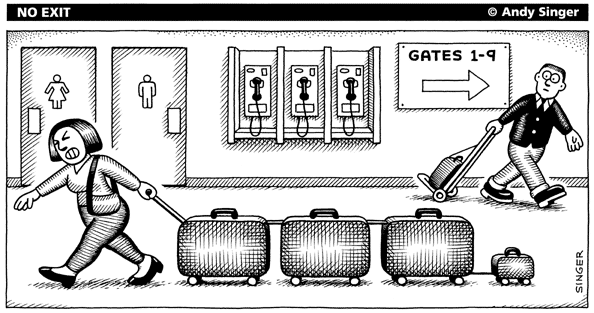
Cartoon by Andy Singer
http://www.airsafe.com/issues/baggage.htm -- Revised 20 February 2017